














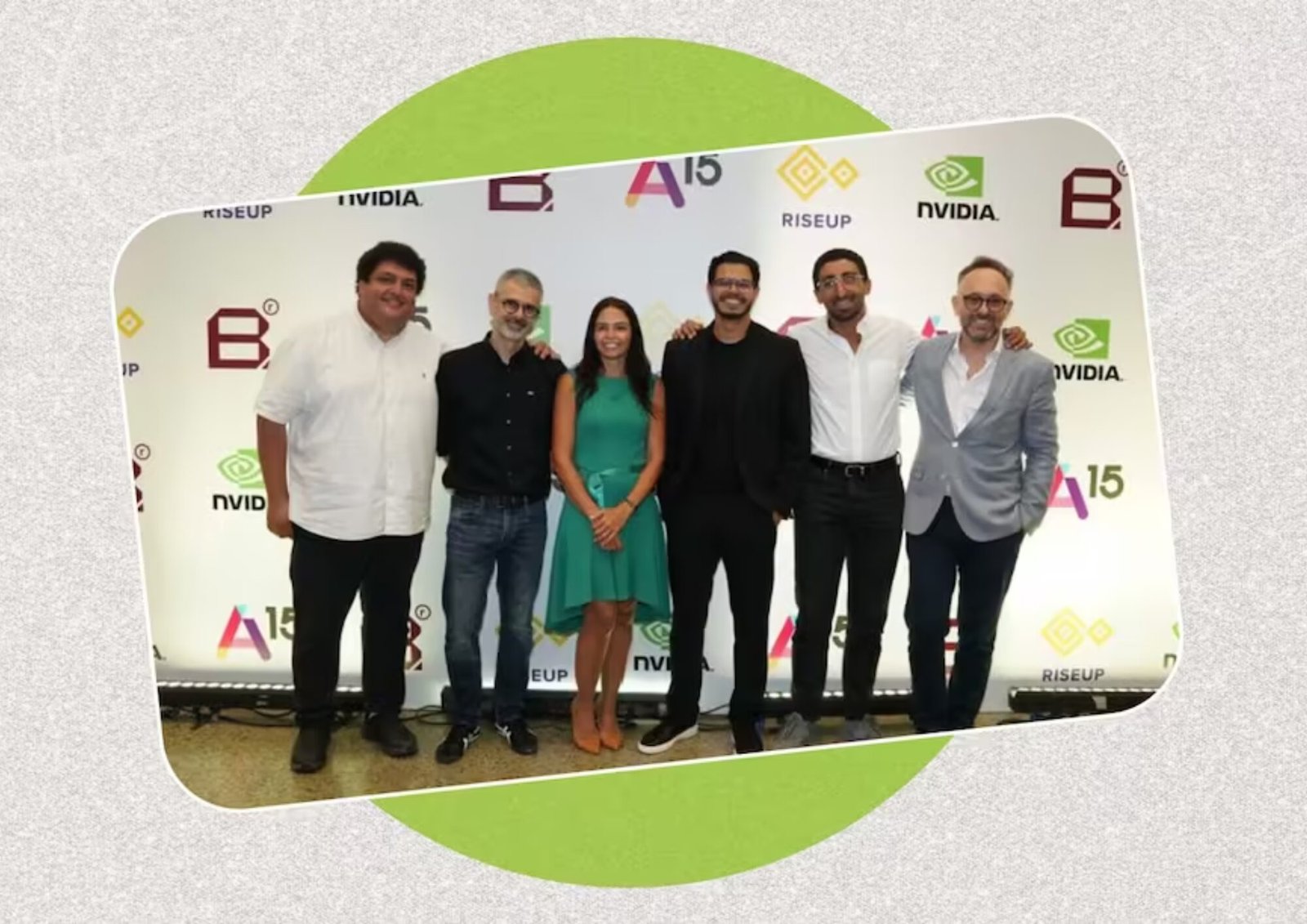
Global AI technology leader NVIDIA has joined forces with Egyptian entrepreneurship organizations RiseUp, A15, and BitRoot to introduce NVIDIA SIGNALS, a new accelerator program designed to support early-stage artificial intelligence startups across Egypt.
The initiative seeks to strengthen Egypt’s growing AI ecosystem by giving founders access to NVIDIA’s AI technologies, expert mentorship, and opportunities to engage with investors. The program is intended to help startups transform promising prototypes into commercially viable products while expanding their reach beyond the Egyptian market.
Although the partnership has been officially announced, organizers have yet to reveal details such as the number of startups to be selected, application timelines, industry priorities, or the level of GPU computing resources that participants will receive.
Strengthening Egypt’s Innovation Ecosystem
The collaboration brings together several influential players in Egypt’s startup landscape.
RiseUp, widely recognized for organizing Cairo’s annual RiseUp Summit, has played a central role in supporting entrepreneurs across North Africa and the Middle East. A15, a Cairo-based venture builder and technology investment firm, has recently expanded its involvement in Egypt’s AI infrastructure, including its participation in the development of a $400 million data center licensed by the country’s National Telecommunications Regulatory Authority in partnership with Hassan Allam Holding.
While BitRoot has also joined the initiative, further information regarding its specific responsibilities within the accelerator has not yet been disclosed.
AI Momentum Continues to Build
The launch comes as Egypt continues to position itself among Africa’s leading artificial intelligence hubs.
Earlier this year, Egypt ranked first on the continent in the 2025 Government AI Readiness Index, reflecting ongoing public-sector investment in digital transformation and AI adoption. Government agencies have also accelerated the deployment of AI-powered platforms aimed at improving investment services, trade facilitation, and public administration.
At the startup level, Egyptian companies have attracted increasing international attention. Among recent milestones are the development of an autonomous agricultural harvesting robot by Egrobots, an NVIDIA Inception member, and Meta’s acquisition of Egyptian voice AI startup PlayAI in 2025.
These developments align with Egypt’s Second National AI Strategy, which aims to generate approximately $42.7 billion in AI-driven economic value by 2030.
NVIDIA Expands Its African Presence
The SIGNALS accelerator is the latest step in NVIDIA’s broader expansion strategy across Africa.
In 2025, the company announced a $700 million partnership with Cassava Technologies to expand AI computing infrastructure across the continent. The initiative includes GPU deployments in data centers across South Africa, Egypt, Kenya, Morocco, and Nigeria, with thousands of graphics processing units expected to be installed over the coming years.
Rather than establishing standalone operations in African markets, NVIDIA has increasingly chosen to work through established local ecosystem partners. The SIGNALS accelerator reflects this approach by combining the company’s technology with the experience and networks of local organizations already supporting entrepreneurs.
Balancing Innovation and Digital Sovereignty
The expansion of international AI partnerships also raises broader policy questions.
Several African countries—including Egypt, Kenya, Nigeria, and South Africa—have acknowledged in recent AI policy discussions that heavy reliance on foreign technology providers could create long-term strategic and security concerns. Dependence on global companies such as NVIDIA, Google, Microsoft, and Meta has emerged as an important consideration in debates surrounding digital sovereignty.
Programs like NVIDIA SIGNALS offer immediate benefits by improving access to advanced AI infrastructure, technical expertise, and global investment networks for local startups. At the same time, they highlight the challenge facing policymakers as they seek to encourage innovation while developing greater domestic technological capacity and reducing long-term dependence on overseas platforms.
For Egyptian entrepreneurs building AI companies today, access to world-class computing resources and funding opportunities is likely to remain the immediate priority. For government leaders shaping the country’s AI future, however, the question of technological independence will continue to play an increasingly important role alongside efforts to accelerate innovation.