












Dutch development finance institution FMO has approved a $30 million senior debt facility for M-KOPA Kenya Mobility, providing a major boost to the company’s efforts to accelerate the adoption of electric motorcycles in Kenya.
The financing package is intended to expand access to affordable electric mobility solutions for thousands of motorcycle riders while supporting Kenya’s broader transition to cleaner transport.
The funding arrangement consists of three separate tranches. FMO will provide two direct loans worth a combined $22.5 million, while an additional $7.5 million will be extended through the bank’s Building Prospects initiative to refinance an existing bridge facility provided by one of M-KOPA’s shareholders. Most of the new capital—up to $23 million—will be used to finance new electric motorcycle purchases under the company’s pay-as-you-go lending model.
Supporting Affordable Electric Mobility
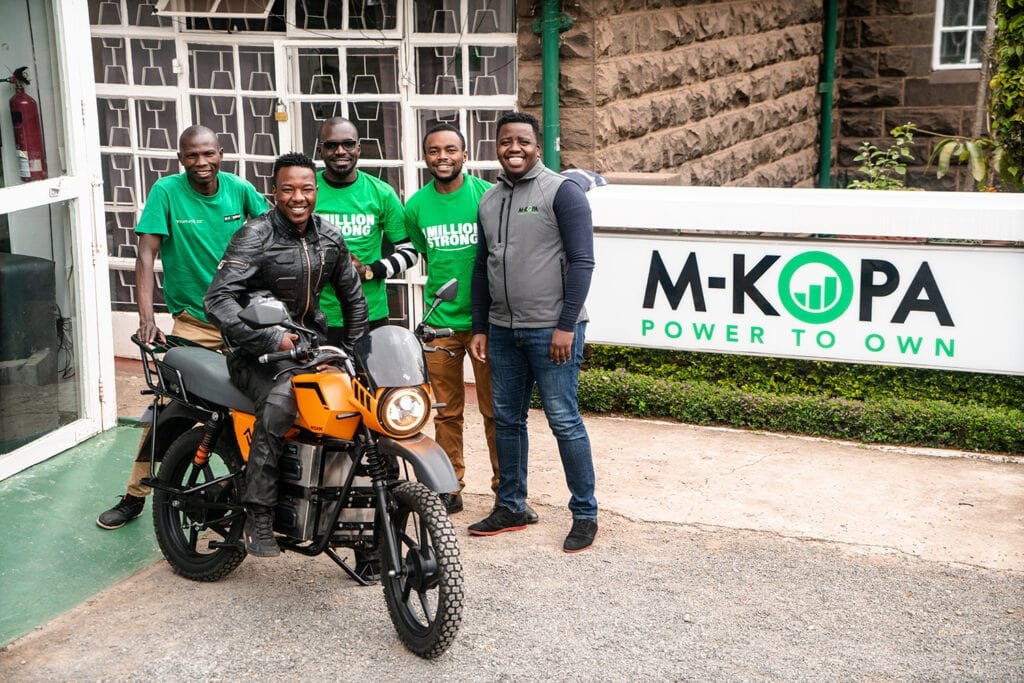
Launched as an independent subsidiary in 2023, M-KOPA Kenya Mobility focuses on selling and financing electric two-wheelers designed for both individual riders and commercial fleets. Its portfolio includes locally assembled Roam Air motorcycles, Ampersand Turaco models, and battery-swapping motorcycles supplied by Spiro, while also serving ride-hailing operators such as Bolt.
Rather than requiring customers to make a large upfront investment, the company allows riders to pay for their motorcycles through affordable daily instalments. The financing package also includes insurance coverage, roadside assistance, theft tracking, and a two-year warranty under the company’s “M-KOPA Cares” protection program.
The business builds on M-KOPA’s long-established pay-as-you-go financing model, which has already been used successfully to distribute solar home systems and, more recently, smartphones across several African markets.
Addressing a Critical Financing Gap
One of the biggest obstacles facing Kenya’s electric mobility sector has been limited access to long-term local-currency financing. Commercial lenders have generally been reluctant to finance emerging clean transport businesses, leaving development finance institutions to fill the gap.
FMO said the investment is designed to improve access to both clean transportation and financial services for small entrepreneurs while helping expand the availability of local-currency lending for the sector. Under the institution’s impact measurement framework, the facility is expected to qualify for both its Green and Reduced Inequalities impact labels.
Growing Demand Across Africa
Founded in 2012, M-KOPA has grown into one of Africa’s largest asset-financing platforms, serving more than 10 million customers across Kenya, Uganda, Nigeria, Ghana, and South Africa.
The company reports that it is onboarding approximately 10,000 new customers every day, driven largely by demand for smartphone financing. Its network of around 40,000 sales agents, combined with a sophisticated digital repayment platform, provides the infrastructure needed to rapidly expand its electric mobility business.
Since 2020, M-KOPA says its revenues have increased by an average of 50% annually, while the total value of loans extended to customers has surpassed $2 billion.
Electrifying Kenya’s Motorcycle Industry
Kenya’s motorcycle taxi industry—commonly known as the boda boda sector—includes an estimated 2 million motorcycles, the overwhelming majority of which still rely on petrol engines.
The Kenyan government has introduced various incentives to encourage electric vehicle adoption, including tax measures and plans to expand charging infrastructure. However, the relatively high purchase price of electric motorcycles and limited access to financing have slowed widespread adoption.
M-KOPA aims to overcome this challenge through its pay-as-you-go financing model, allowing riders to acquire motorcycles without a significant upfront payment. According to the company, switching to electric motorcycles can reduce operating costs by approximately KSh300 per day compared with petrol-powered alternatives, providing meaningful savings for riders whose incomes depend on daily transport services.
Long-Term Growth Strategy
M-KOPA Chief Financial Officer Faraimose Kutadzaushe has previously said the company’s growth strategy is centered on serving informal workers—whom the business describes as “Every Day Earners.” That customer-first approach, already proven in consumer asset financing, is now being extended to electric mobility as the company broadens its product offering.
Once the financing agreement is finalized, the new facility will strengthen M-KOPA Kenya Mobility’s long-term funding position and provide additional momentum for the expansion of electric transport. It also reflects the continued role of development finance institutions in supporting Africa’s growing green mobility sector at a time when commercial funding remains limited.