















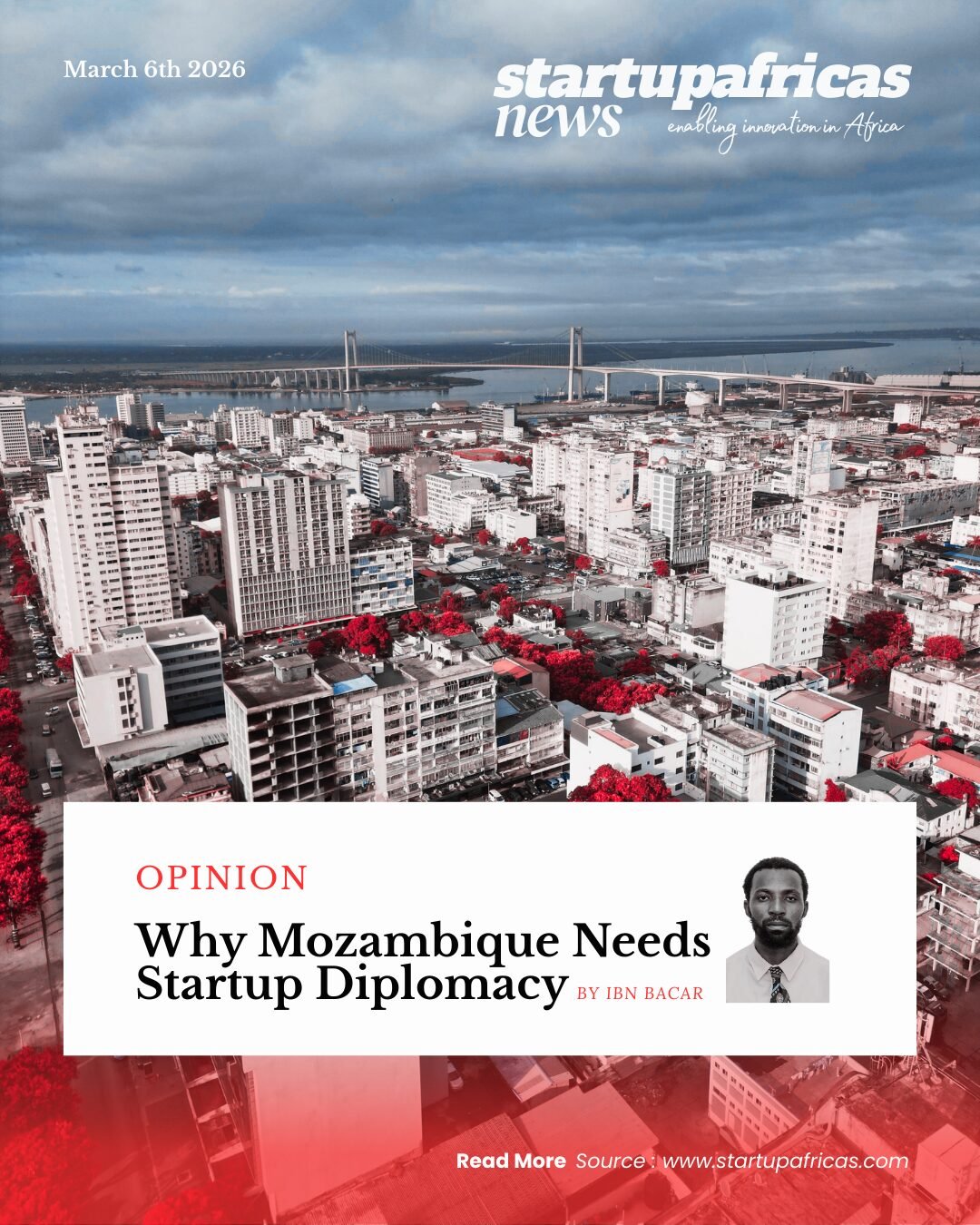
Why Mozambique Needs Startup Diplomacy
As the world becomes increasingly digital, innovative, and interconnected, a country’s ability to generate ideas, turn technology into businesses, and build competitive entrepreneurship ecosystems has become central to economic sovereignty.
For Mozambique, this is a decisive moment. The country has a young, talented, and ambitious population, yet traditional economic sectors cannot absorb the full potential of this human capital. Without strategic action, millions of young people may remain outside the formal economy while opportunities for growth and innovation remain untapped.
This is where an innovative approach comes into play: Startup Diplomacy.
What is Startup Diplomacy?
Unlike traditional diplomacy, which focuses on trade, security, or infrastructure, Startup Diplomacy proposes that countries strategically cooperate to strengthen innovation ecosystems. Its key objectives include:
- Sharing best practices in public policies that support startups;
- Facilitating cross-border investment in emerging companies;
- Connecting hubs, accelerators, and incubators across the continent;
- Promoting startup internationalization, enabling regional and global expansion.
In essence, it is about making innovation and entrepreneurship a strategic and diplomatic priority, recognizing that startups can create jobs, attract investment, and strengthen economies sustainably.
Lessons from Africa
Recent data shows that just four African countries (Egypt, Nigeria, Kenya, and South Africa) absorbed 72% of the US$4.1 billion equity investment in African startups in 2025. This demonstrates that concentrated ecosystems, backed by clear policies, innovation hubs, and structured investment, are decisive for growth.
Egypt: National Startup Charter + public and private funds + institutional support → fintech, e-commerce, and digital health thrive;
Nigeria: Lagos as tech hub → fintech, agritech, e-commerce; West Africa’s top venture capital destination.
Kenya: Nairobi → regional innovation and fintech hub, supported by accelerators and venture capital.
South Africa: Johannesburg and Cape Town → mature ecosystem, producing global tech startups.
Rwanda: Small market, but strong government policies, incubators, and digital infrastructure created a vibrant ecosystem.
These examples show that structured policies, strategic funding, and connected hubs accelerate startup growth and deliver real economic impact.
Mozambique: Potential and Opportunity
Mozambique has unique conditions to become an innovation hub:
Young, digitally engaged population (>60% under 25 years old);
Emerging entrepreneurial communities, especially in Maputo, Beira and Nampula;
Interest from international investors, including UNDP and World Bank;
Potential for regional hubs, connecting Portuguese-speaking African ecosystems.
Yet, the country still faces significant challenges:
- Limited access to financing;
- Complex regulatory environment and absence of startup-specific tax incentives;
- Weak integration among universities, hubs, and private sector;
- Skills gap in programming, startup management, digital marketing, and innovation;
- Small domestic markets and limited regional reach.
Without clear policies and strategic cooperation, many promising ideas may never get off the ground, limiting Mozambique’s economic potential.
National Startup Charter: The Strategic Solution
A National Startup Charter combined with Startup Diplomacy provides a roadmap to turn challenges into opportunities. The Charter would:
- Establish clear regulations and fiscal incentives for startups;
- Create public-private investment funds for emerging companies;
- Develop innovation hubs beyond the capital;
- Equip young entrepreneurs with digital and management skills;
- Facilitate internationalization and regional expansion.
By aligning internal policies with external partnerships, Mozambique not only strengthens its local ecosystem but also positions itself as a regional innovation hub.
Why Action is Urgent
- Youth employment: Startups create high-quality jobs for young talent;
- Economic diversification: Reduces reliance on natural resources;
- Global competitiveness: Innovative companies enter international value chains;
- Regional integration: Connects Mozambique with African hubs, fostering knowledge, capital, and market exchange.
In a continent where ecosystems remain fragmented, Startup Diplomacy enables structured cooperation and cross-country learning, strengthening the regional economy.
Call to Action
Mozambique has a historic opportunity to transform its economy through innovation. But success depends on coordination and vision.
- Approve the National Startup Charter;
- Invest in hubs, incubators, and youth entrepreneurship programs;
- Create investment funds and fiscal incentives;
- Establish regional and international partnerships;
- Monitor outcomes and adjust policies continuously.
The country’s economic future depends on bold ideas, talented youth, and companies willing to challenge the status quo. Startup Diplomacy is the bridge that can transform this potential into economic growth, innovation, and independence.
Conclusion
Economic value is no longer solely in natural resources or traditional sectors. It lies in ideas, technology, and the capacity to scale innovative solutions.
Mozambique has all the ingredients to become a regional innovation hub in Southern Africa. With vision, courage, and coordination, and with the National Startup Charter supported by Startup Diplomacy, the country can not only catch up but lead Africa’s innovation revolution.