

















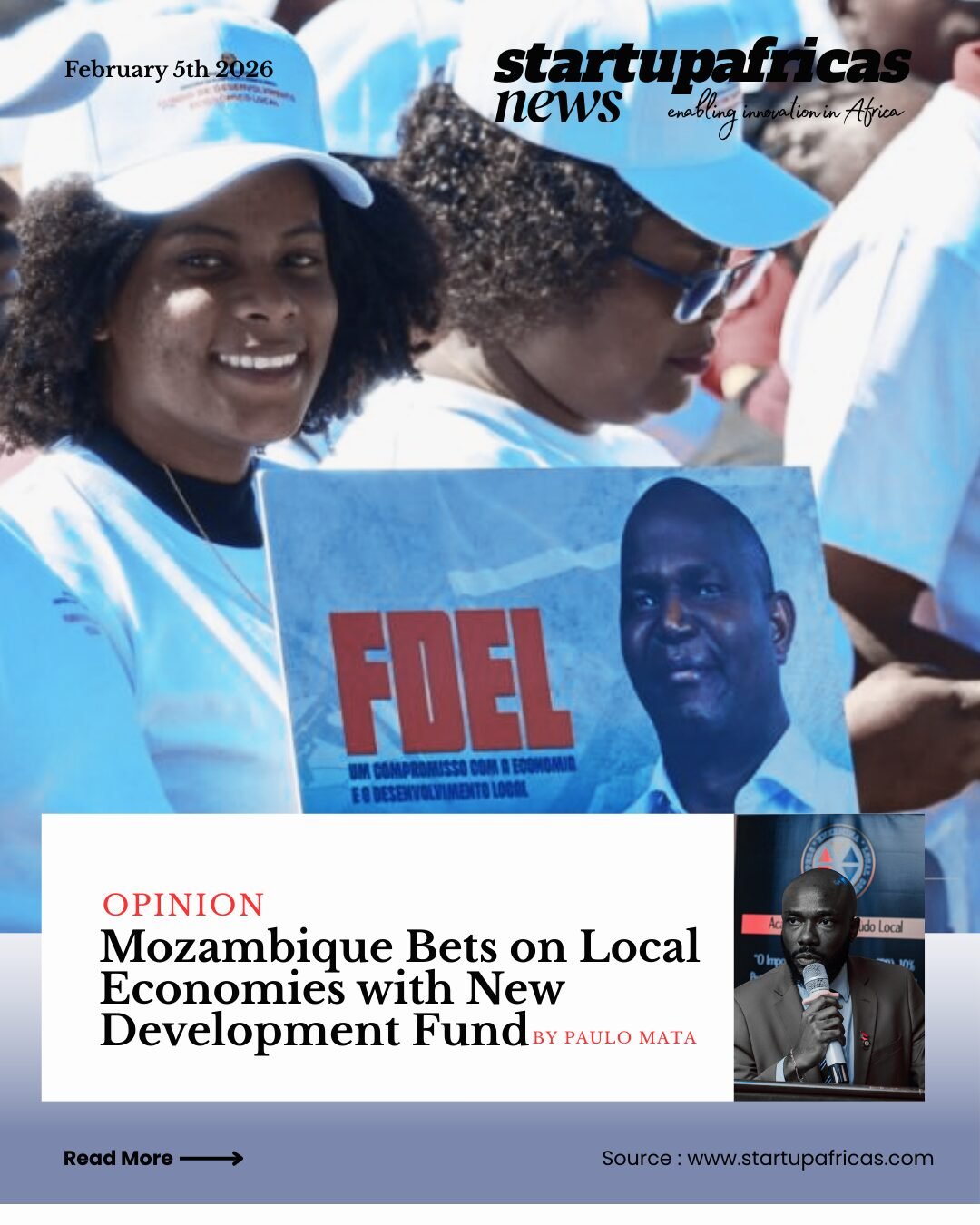
Mozambique has launched an ambitious public financing initiative aimed at unlocking grassroots entrepreneurship and revitalising local economies, as the country grapples with high youth unemployment, limited access to credit, and persistent regional inequalities.
The Local Economic Development Fund (FDEL), officially launched by President Daniel Francisco Chapo, is one of the most far-reaching decentralised economic programmes introduced in recent years. It is designed to channel public resources directly into small-scale, locally driven business initiatives, particularly those led by young people and women who are typically excluded from formal financial systems.
Bridging the Financing Gap
Established under Decree No. 4/2025, the FDEL seeks to promote economic activity at district and municipal levels by financing projects that generate income, create jobs, and stimulate local production. Priority sectors include agriculture, livestock, trade, poultry farming, and community-based services, areas that form the backbone of Mozambique’s informal and semi-formal economy.
Unlike conventional bank loans, which often require collateral and formal credit histories, the FDEL provides reimbursable financing on more accessible terms, lowering entry barriers for first-time entrepreneurs. The model reflects a broader shift in African public policy toward development finance instruments that prioritise inclusion over purely commercial viability.
Focus on Youth and Inclusion
A defining feature of the fund is its strong youth orientation. Around 60 per cent of FDEL resources are earmarked for youth-led projects, reflecting the demographic reality of Mozambique, where the majority of the population is under 25.
By targeting young entrepreneurs, the government is attempting to address a structural bottleneck common across the continent: the inability of micro-enterprises and startups to access early-stage capital. Similar gaps have been addressed elsewhere through alternative finance models, including cooperative funds and Islamic finance mechanisms, but Mozambique’s approach relies primarily on public funding combined with local oversight.
Strong Demand, Limited Resources
The response to the programme has been striking. Within months of its launch, the FDEL received over 230,000 applications nationwide, far exceeding initial expectations. Projects span both rural and urban areas, underscoring the depth of latent entrepreneurial activity and the scale of unmet financing needs.
Demand has, in many cases, surpassed available resources several times over, highlighting both the popularity of the fund and the constraints it faces. Still, the volume of applications has strengthened the government’s case for expanding the programme.
Decentralised Governance Model
In an effort to improve transparency and community ownership, the FDEL is being implemented through a decentralised structure. Selection and monitoring committees operate at district and community levels, responsible for evaluating proposals and overseeing project implementation.
Supporters argue that this model enhances accountability and ensures funding decisions reflect local economic priorities. Critics, however, note that decentralisation also requires strong institutional capacity to prevent politicisation and ensure consistent standards across regions.
Scaling Up in 2026
By the end of 2025, hundreds of projects had been approved and funded, enabling beneficiaries to start or expand small businesses. While individual loan sizes remain modest, early indications suggest meaningful local impact in terms of income generation and employment.
Encouraged by the programme’s reach, the government has announced plans to increase the FDEL budget in 2026 from 824.6 million meticais (approximately USD 13 million) to around 1.5 billion meticais. The expansion signals a sustained political commitment to decentralised development and inclusive growth.
A Test Case for Grassroots Development
More than a financing mechanism, the FDEL represents a broader policy experiment: whether state-led, locally administered funds can successfully stimulate bottom-up economic growth in low-income, high-informality contexts.
Under President Chapo, the initiative reflects a governance approach that positions the state not only as a regulator, but as an enabler of citizen-led development. Its long-term success, however, will depend on effective monitoring, repayment discipline, and the ability to scale without eroding governance standards.
If successful, Mozambique’s Local Economic Development Fund could offer a replicable model for other African countries seeking to translate demographic pressure into entrepreneurial opportunity and local initiative into sustainable growth.