
















I write these lines not out of passing enthusiasm, but from conviction forged in daily engagement with the entrepreneurial ecosystem. Mozambique stands at the threshold of a digital transformation capable of reshaping its economic destiny. Last week, that trajectory gained both clarity and direction under the leadership of President Daniel Francisco Chapo. For small and medium-sized enterprises (SMEs), this is not a ceremonial moment. It is a strategic inflection point, one that cannot be ignored without consequence.
A Head of State’s Strategic Signal
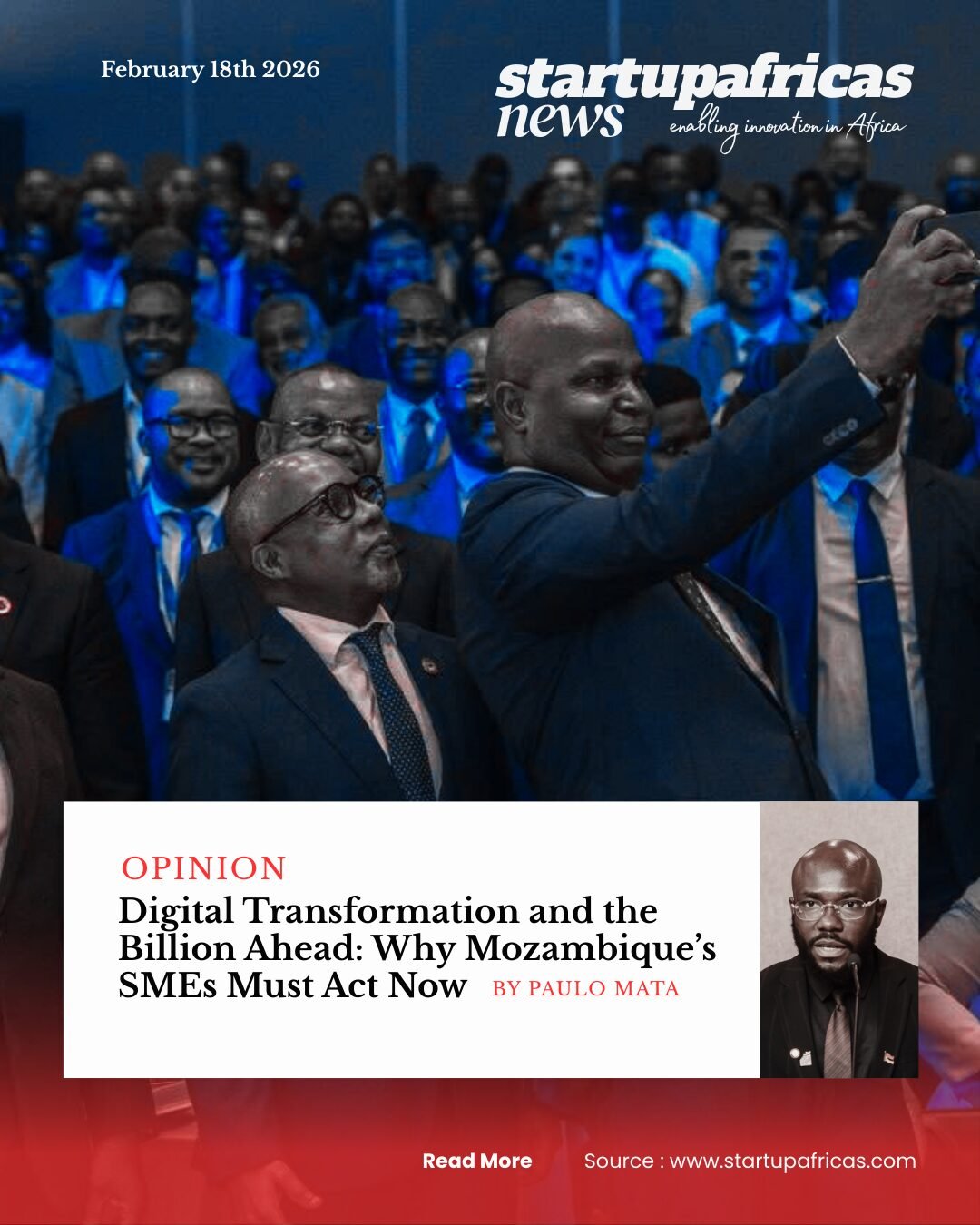
On 11–12 February 2026, Maputo hosted the First National Conference on Digital Transformation under the banner: “Towards a Modern, Digital and Citizen-Centered State.” The message was unequivocal: digitalization is not cosmetic reform; it is a pillar of national sovereignty.
The agenda went beyond rhetoric. It addressed the integration of public systems, strengthened cybersecurity, elimination of administrative redundancies, and the modernization of public service delivery. Anchored in the National Digital Acceleration Program, investments in fiber-optic expansion and data centers at the Maluana Science and Technology Park signal institutional seriousness. Faster services, improved transparency, and reduced corruption are not simply governance goals, they are economic multipliers.
For SMEs, this matters profoundly. When the state modernizes, transaction costs fall. When systems integrate, compliance simplifies. When transparency improves, competitiveness increases.
The Numbers Demand Urgency
Yet the data tells a sobering story. As of January 2025, Mozambique counted approximately 6.96 million internet users, roughly 19.8% of the population. GovTech maturity has improved, but most SMEs remain digitally underdeveloped. More than half have not begun a serious digitalization process, hindered by limited strategy, capital constraints, or insufficient digital literacy.
Meanwhile, across the continent, African startups attracted over $3 billion in funding in 2025. The capital has returned, but it is more disciplined, prioritizing profitability, efficiency, and scalable models. This shift does not exclude Mozambique; rather, it challenges it. Fintech, agritech, and digital services offer credible pathways for the country to attract investment, generate employment, and build economic resilience. The opportunity is continental. The readiness must be local.
Where Constraint Becomes Competitive Edge
Digital inequality persists, particularly in rural regions. Yet this very asymmetry presents opportunity. Public–private partnerships can extend connectivity, unlock local innovation, and integrate underserved markets into national value chains. SMEs willing to adopt digital tools, from cloud-based operations to e-commerce platforms, can leapfrog traditional limitations.
This is not merely technological adoption; it is structural repositioning. The digital economy rewards agility, data-driven decision-making, and cross-border scalability. Mozambican enterprises that internalize this logic will not simply survive domestic reform, they will expand beyond it.
Enermina and the Architecture of Visibility
In this context, initiatives such as Enermina, developed by the Academia do Conteúdo Local under the Mozambique Digital project, represent more than platforms, they are infrastructure for visibility. By consolidating databases of companies, professionals, and events, Enermina strengthens digital presence, streamlines procurement processes, and facilitates strategic partnerships.
Visibility in today’s economy is not vanity; it is leverage. Integration of local content into extractive value chains aligns directly with the presidential vision of economic autonomy and transparency. SMEs that fail to position themselves within such ecosystems risk exclusion from emerging supply networks.
The Responsibility of Ecosystem Builders
At Startup África News, we recognize that policy declarations alone do not produce transformation. Ecosystems do. Our data-driven platform tracks innovation across agriculture, education, and finance; we provide practical mentorship in e-commerce and cloud adoption; and we connect Mozambican entrepreneurs with continental investors.
Reducing the digital gap among SMEs is not simply a commercial objective, it is a national imperative. When local enterprises scale, the broader economy stabilizes. When SMEs digitize, productivity compounds.
The Billion-Dollar Question
Mozambique is not destined to be a peripheral player in Africa’s digital century. It can become a regional innovation hub, but only if its SMEs act with urgency and strategic foresight.
The next African billion will not emerge by accident. It will be built by enterprises that recognize the moment, align with institutional reforms, and invest decisively in digital capability.
The President has set the direction. The infrastructure is being laid. Capital is circulating across the continent.
The only unresolved variable is us.
Are Mozambican SMEs ready to claim their place in Africa’s digital ascent, or will they watch the opportunity pass from the sidelines?